
Anti–IgLON5 Antibodies
Test details
This laboratory assay detects IgG autoantibodies against IgLON5 (Immunoglobulin-like domain–containing protein family member 5), a cell-adhesion molecule of the immunoglobulin superfamily. IgLON proteins are highly glycosylated, contain three Ig-like domains and are normally GPI-anchored to the plasma membrane. They play key roles in neurodevelopment, contributing to neurite outgrowth and synaptogenesis.
A positive test supports the diagnosis of anti-IgLON5 antibody syndrome, an autoimmune neurological disorder with a possible neurodegenerative imprint, typically presenting with complex sleep disturbances – obstructive sleep apnoea, stridor, REM and NREM parasomnias – plus bulbar dysfunction (dysarthria, dysphagia), gait disturbance, oculomotor abnormalities, cognitive deficits and dysautonomia. Anti-IgLON5 antibodies are suspected to promote pathological tau aggregation, linking the syndrome to tauopathies. These recently described autoantibodies are particularly relevant in the differential diagnosis of suspected limbic encephalitis.
Early antibody testing is important, as the syndrome may have a treatable autoimmune component responsive to immunosuppressive therapy, though therapeutic response varies. Results must always be interpreted in the context of the clinical picture, given the broad phenotypic heterogeneity.
Sample type
Serum, EDTA plasma, heparin plasma, citrate plasma, CSF
Method
IFA cells
Preparation
Fasting for at least 8-12 hours before sampling
Storage conditions
Refer to the Health Service Charter to check storage conditions
Shipping
+2/+8°C
References
Graus F, Sabater L, Gaig C, Gelpi E, Iranzo A, Dalmau JO, Santamaria J. Anti-IgLON5 Disease 10 Years Later: What We Know and What We Do Not Know. Neurol Neuroimmunol Neuroinflamm. 2025 Jan;12(1):e200353. doi: 10.1212/NXI.0000000000200353. Epub 2024 Dec 20. PMID: 39705634; PMCID: PMC11666276.
Gaig C, Sabater L. New knowledge on anti-IgLON5 disease. Curr Opin Neurol. 2024 Jun 1;37(3):316-321. doi: 10.1097/WCO.0000000000001271. Epub 2024 Apr 1. PMID: 38563128; PMCID: PMC11064895.
Madetko N, Marzec W, Kowalska A, Przewodowska D, Alster P, Koziorowski D. Anti-IgLON5 Disease - The Current State of Knowledge and Further Perspectives. Front Immunol. 2022 Mar 1;13:852215. doi: 10.3389/fimmu.2022.852215. PMID: 35300333; PMCID: PMC8921982.
Gaig C, Iranzo A, Cajochen C, Vilaseca I, Embid C, Dalmau J, Graus F, Santamaria J. Characterization of the sleep disorder of anti-IgLON5 disease. Sleep. 2019 Sep 6;42(9):zsz133. doi: 10.1093/sleep/zsz133. PMID: 31198936.
Sabater L, Gaig C, Gelpi E, Bataller L, Lewerenz J, Torres-Vega E, Contreras A, Giometto B, Compta Y, Embid C, Vilaseca I, Iranzo A, Santamaría J, Dalmau J, Graus F. A novel non-rapid-eye movement and rapid-eye-movement parasomnia with sleep breathing disorder associated with antibodies to IgLON5: a case series, characterisation of the antigen, and post-mortem study. Lancet Neurol. 2014 Jun;13(6):575-86. doi: 10.1016/S1474-4422(14)70051-1. Epub 2014 Apr 3. Erratum in: Lancet Neurol. 2015 Jan;14(1):28. PMID: 24703753; PMCID: PMC4104022.
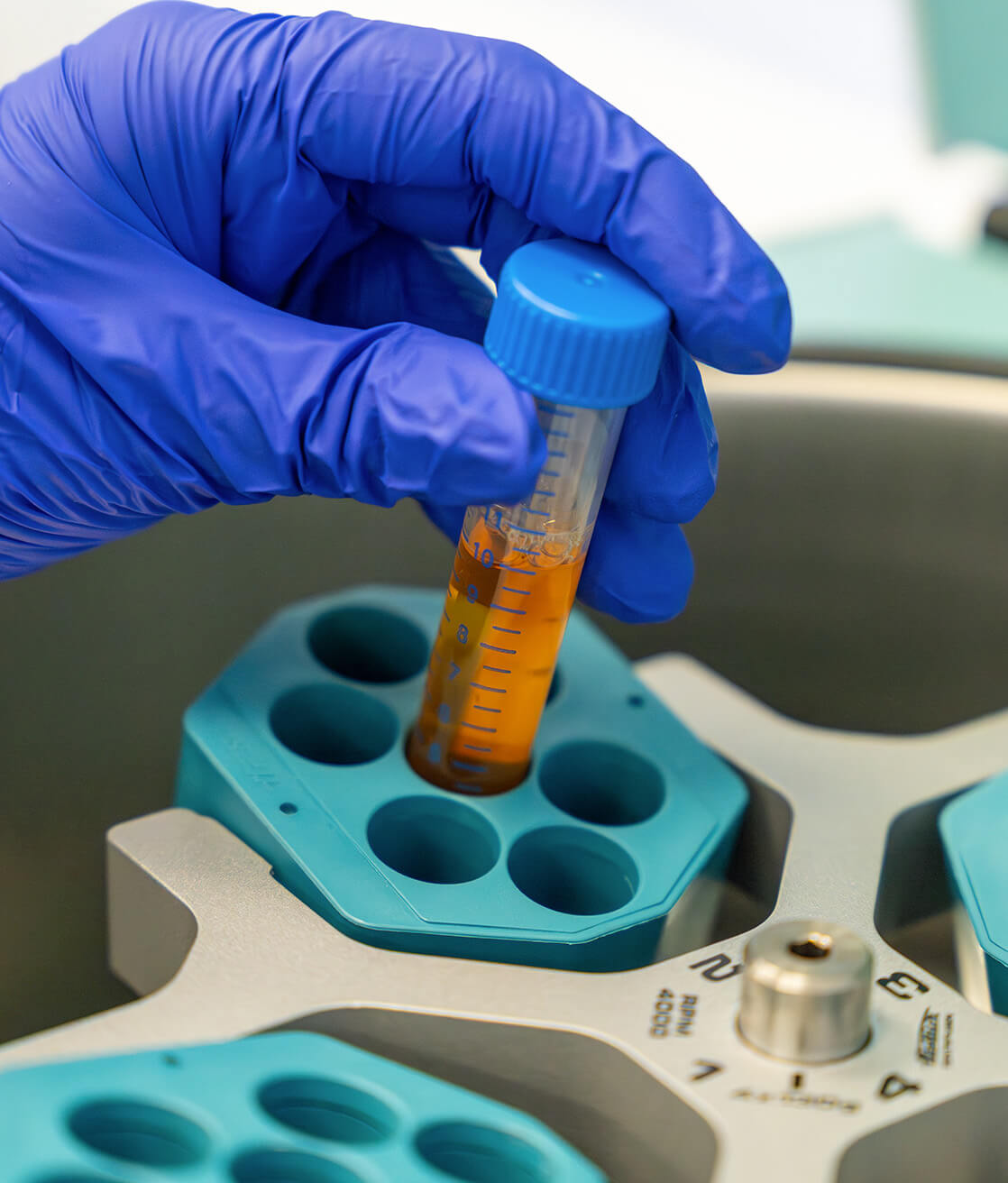
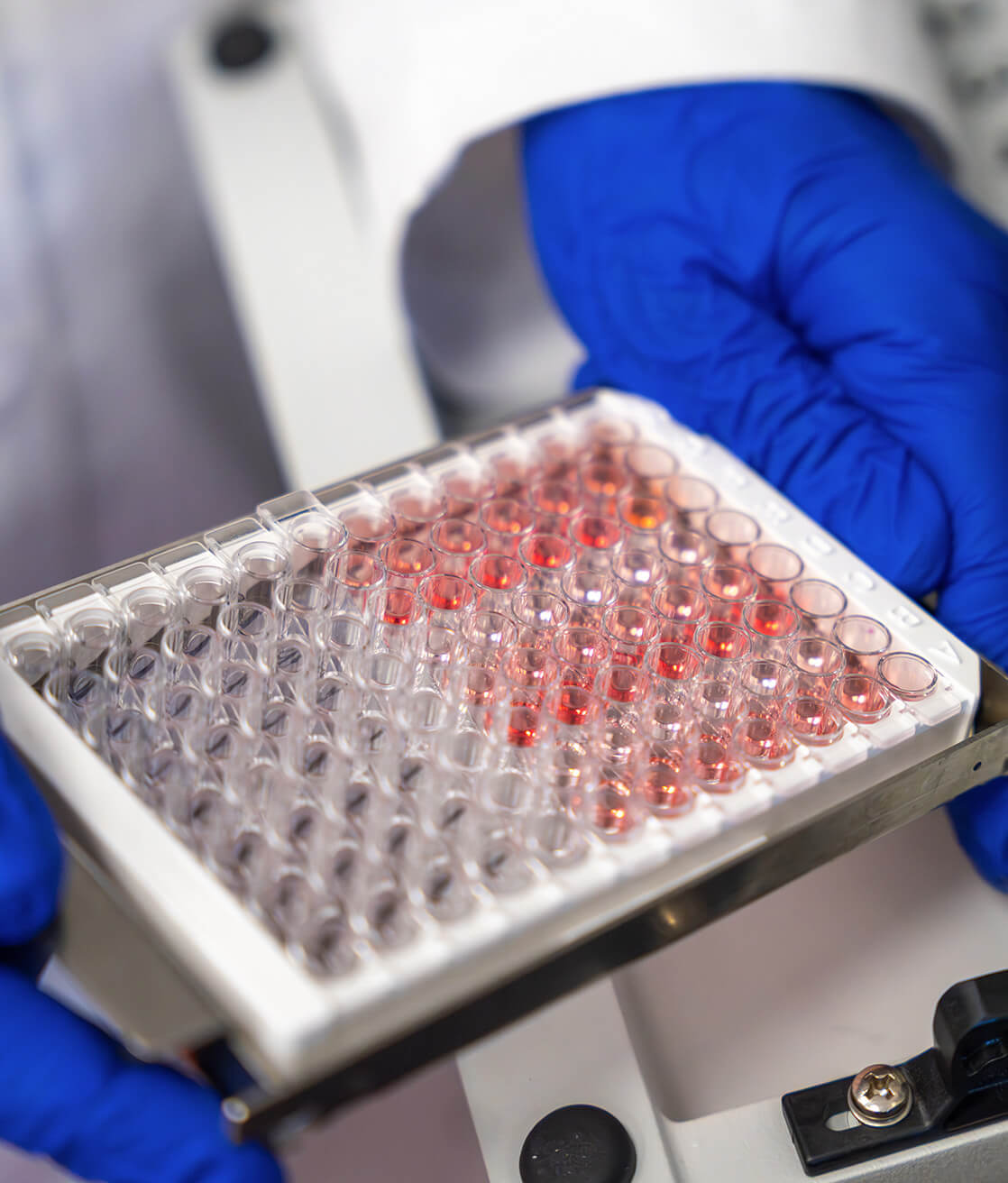
laboratory analysis
Find other tests
Total tau
This test provides the quantitative determination of total tau protein to support the diagnosis of Alzheimer’s disease.
Phosphorylated Tau (pTau181)
This test provides the quantitative determination of tau protein phosphorylated at threonine 181 (pTau181), to support the diagnosis of Alzheimer’s disease.
Anti–NMDAR Antibodies
Test for the determination of human autoantibodies against NMDAR to support the diagnosis of paraneoplastic neurological syndromes with an intermediate-risk phenotype.
Discover what’s new
Subscribe to the newsletter
Subscribe to our newsletter to be always updated.