
Anti–GAD antibodies
Test details
Type 1 diabetes is a chronic autoimmune disease characterised by the selective destruction of the pancreatic islet β-cells in charge of producing insulin. Their destruction leads to the severe or complete deficiency of endogenous insulin and deep metabolic dysregulation. Onset typically occurs in childhood or adolescence, but a more slowly progressive variant affecting adults – known as latent autoimmune diabetes in adults (LADA) – also exists.
Typical clinical symptoms include polyuria, polydipsia, weight loss and, in 25–50% of cases at diagnosis, the development of diabetic ketoacidosis (DKA), a potentially life-threatening condition.
Type 1 diabetes is now considered a progressive, staged disease:
- Stage 1: presence of two or more islet autoantibodies, normoglycaemia, and no symptoms;
- Stage 2: presence of autoantibodies with dysglycaemia (prediabetes), still asymptomatic;
- Stage 3: clinical onset with symptomatic hyperglycaemia.
Early recognition of the preclinical phase allows earlier intervention and prevention of DKA at onset. For this reason, the American Diabetes Association (ADA) and the European Association for the Study of Diabetes (EASD) recommend testing for islet autoantibodies in adults with suspected type 1 diabetes. The main autoantibodies associated with type 1 diabetes are:
- IAA (insulin autoantibodies): directed against insulin, these are often the first autoantibodies detected in young children, and become less frequent with age;
- GADA (anti–glutamic acid decarboxylase): the most common overall, they are present in both children and adults (especially in LADA). Frequently the only positive autoantibody in adults, they are associated with a slower progression to overt diabetes;
- IA-2A (anti–IA-2 antigen): directed against tyrosine phosphatase on pancreatic β-cells, they are linked with greater autoimmune aggressiveness and faster progression to stage 3;
- ZnT8A (anti–zinc transporter 8): directed against a transmembrane protein involved in zinc accumulation in insulin granules; may be present in individuals who are seronegative for other autoantibodies, thereby improving overall screening sensitivity.
To classify early-stage type 1 diabetes (stage 1 or 2), persistence of at least two islet autoantibodies on two separate samples over time is required. This requirement has become central in prevention, screening and international clinical trial protocols.
In addition, patients with type 1 diabetes show a higher predisposition to associated autoimmune diseases – such as Hashimoto’s thyroiditis, Graves’ disease and coeliac disease – so targeted screening is often indicated.
Sample type
Serum, EDTA plasma, heparin plasma, citrate plasma
Method
ELISA
Preparation
Fasting for at least 8-12 hours before sampling
Storage conditions
Refer to the Health Service Charter to check storage conditions
Shipping
+2/+8°C
References
Moshe Phillip, Peter Achenbach, Ananta Addala, Anastasia Albanese-O’Neill, Tadej Battelino, Kirstine J. Bell, Rachel E.J. Besser, Ezio Bonifacio, Helen M. Colhoun, Jennifer J. Couper, Maria E. Craig, Thomas Danne, Carine de Beaufort, Klemen Dovc, Kimberly A. Driscoll, Sanjoy Dutta, Osagie Ebekozien, Helena Elding Larsson, Daniel J. Feiten, Brigitte I. Frohnert, Robert A. Gabbay, Mary P. Gallagher, Carla J. Greenbaum, Kurt J. Griffin, William Hagopian, Michael J. Haller, Christel Hendrieckx, Emile Hendriks, Richard I.G. Holt, Lucille Hughes, Heba M. Ismail, Laura M. Jacobsen, Suzanne B. Johnson, Leslie E. Kolb, Olga Kordonouri, Karin Lange, Robert W. Lash, Åke Lernmark, Ingrid Libman, Markus Lundgren, David M. Maahs, M. Loredana Marcovecchio, Chantal Mathieu, Kellee M. Miller, Holly K. O’Donnell, Tal Oron, Shivajirao P. Patil, Rodica Pop-Busui, Marian J. Rewers, Stephen S. Rich, Desmond A. Schatz, Rifka Schulman-Rosenbaum, Kimber M. Simmons, Emily K. Sims, Jay S. Skyler, Laura B. Smith, Cate Speake, Andrea K. Steck, Nicholas P.B. Thomas, Ksenia N. Tonyushkina, Riitta Veijola, John M. Wentworth, Diane K. Wherrett, Jamie R. Wood, Anette-Gabriele Ziegler, Linda A. DiMeglio; Consensus Guidance for Monitoring Individuals With Islet Autoantibody–Positive Pre-Stage 3 Type 1 Diabetes. Diabetes Care 25 July 2024; 47 (8): 1276–1298. https://doi.org/10.2337/dci24-0042
American Diabetes Association Professional Practice Committee. 2. Diagnosis and Classification of Diabetes: Standards of Care in Diabetes-2024. Diabetes Care. 2024 Jan 1;47(Suppl 1):S20-S42. doi: 10.2337/dc24-S002. PMID: 38078589; PMCID: PMC10725812.
Holt RIG, DeVries JH, Hess-Fischl A, Hirsch IB, Kirkman MS, Klupa T, Ludwig B, Nørgaard K, Pettus J, Renard E, Skyler JS, Snoek FJ, Weinstock RS, Peters AL. The management of type 1 diabetes in adults. A consensus report by the American Diabetes Association (ADA) and the European Association for the Study of Diabetes (EASD). Diabetologia. 2021 Dec;64(12):2609-2652. doi: 10.1007/s00125-021-05568-3. Erratum in: Diabetologia. 2022 Jan;65(1):255. doi: 10.1007/s00125-021-05600-6. PMID: 34590174; PMCID: PMC8481000.
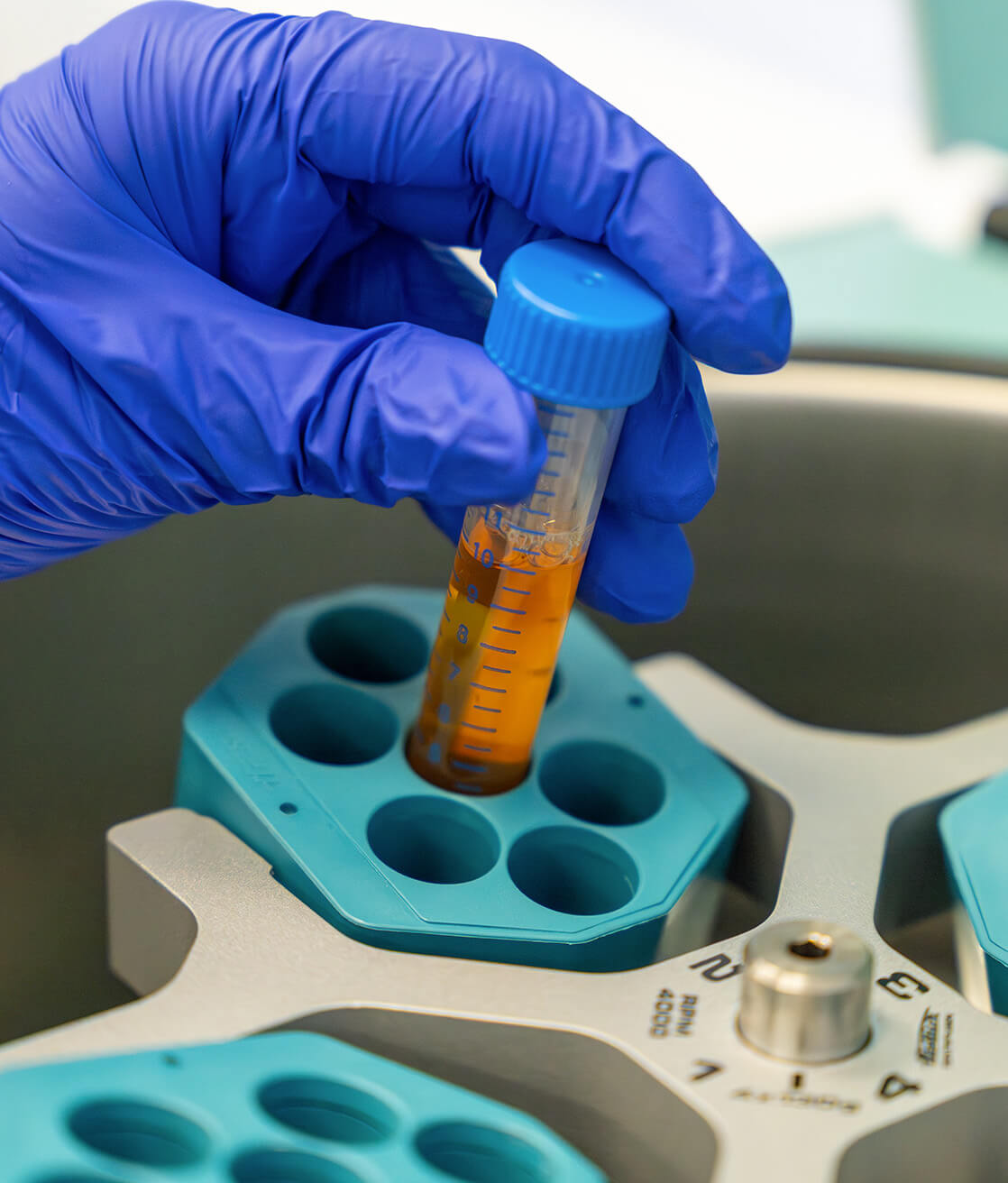

laboratory analysis
Find other tests
Total tau
This test provides the quantitative determination of total tau protein to support the diagnosis of Alzheimer’s disease.
Phosphorylated Tau (pTau181)
This test provides the quantitative determination of tau protein phosphorylated at threonine 181 (pTau181), to support the diagnosis of Alzheimer’s disease.
Anti–NMDAR Antibodies
Test for the determination of human autoantibodies against NMDAR to support the diagnosis of paraneoplastic neurological syndromes with an intermediate-risk phenotype.
Discover what’s new
Subscribe to the newsletter
Subscribe to our newsletter to be always updated.