
Anti–NF186 Antibodies
Test details
This laboratory assay detects IgG autoantibodies against NF186, a glycoprotein located at the node of Ranvier, the specialised structure that enables saltatory conduction along myelinated axons. NF186 is essential for nodal organisation and stability, working in concert with other proteins to maintain myelin integrity and efficient nerve transmission. Anti-NF186 antibodies (predominantly IgG4) are associated to an acute or subacute onset and can resemble Guillain–Barré syndrome or variants of CIDP. Patients typically show distal and proximal motor weakness (often symmetric, sometimes asymmetric) with sensory reduction; sensory ataxia and coarse tremor are less common than in anti-NF155 disease.
Electrophysiology shows a demyelinating pattern with or without axonal involvement; CSF protein may be elevated. Brachial plexus MRI is usually normal or only mildly altered. A rapid/subacute onset may lead to an initial GBS diagnosis, but the limited response to IVIG helps distinguish this form. Systemic corticosteroids are often effective, and targeted immunotherapies (e.g., rituximab) can be particularly beneficial.
In general, the form of autoimmune neuropathy associated with anti-NF186 antibodies, together with those associated with anti-NF155, anti-CNTN1 and anti-CASPR1 antibodies, respectively, falls into the category of “nodopathies” or “autoimmune paranodopathies,” a group of autoimmune neuropathies characterized by autoantibodies against node and paranode adhesion molecules. They have clinical characteristics that are quite distinct from classic CIDP. None show clear signs of inflammation or macrophage-mediated demyelination, and all respond poorly to specific treatments for CIDP. This test is useful and essential in the differential diagnosis and therapeutic management of demyelinating neuropathies.
Sample type
Serum, plasma
Method
IFA cells
Preparation
Fasting for at least 8-12 hours before sampling
Storage conditions
Refer to the Health Service Charter to check storage conditions
Shipping
+2/+8°C
References
Johnson CB, Fehmi J, Rinaldi S. The immunology and neuropathology of the autoimmune nodopathies. J Neuroimmunol. 2025 Sep 15;406:578665. doi: 10.1016/j.jneuroim.2025.578665. Epub 2025 Jun 9. PMID: 40505341
Gupta P, Mirman I, Shahar S, Dubey D. Growing Spectrum of Autoimmune Nodopathies. Curr Neurol Neurosci Rep. 2023 May;23(5):201-212. doi: 10.1007/s11910-023-01264-4. Epub 2023 Apr 4. PMID: 37014546.
Liu B, Zhou L, Sun C, Wang L, Zheng Y, Hu B, Qiao K, Zhao C, Lu J, Lin J. Clinical profile of autoimmune nodopathy with anti-neurofascin 186 antibody. Ann Clin Transl Neurol. 2023 Jun;10(6):944-952. doi: 10.1002/acn3.51775. Epub 2023 Apr 14. PMID: 37060203; PMCID: PMC10270277.
Martín-Aguilar L, Lleixà C, Pascual-Goñi E. Autoimmune nodopathies, an emerging diagnostic category. Curr Opin Neurol. 2022 Oct 1;35(5):579-585. doi: 10.1097/WCO.0000000000001107. Epub 2022 Aug 19. PMID: 35989582.
M Van den Bergh PYK, van Doorn PA, Hadden RDM, Avau B, Vankrunkelsven P, Allen JA, Attarian S, Blomkwist-Markens PH, Cornblath DR, Eftimov F, Goedee HS, Harbo T, Kuwabara S, Lewis RA, Lunn MP, Nobile-Orazio E, Querol L, Rajabally YA, Sommer C, Topaloglu HA. European Academy of Neurology/Peripheral Nerve Society guideline on diagnosis and treatment of chronic inflammatory demyelinating polyradiculoneuropathy: Report of a joint Task Force-Second revision. Eur J Neurol. 2021 Nov;28(11):3556-3583. doi: 10.1111/ene.14959. Epub 2021 Jul
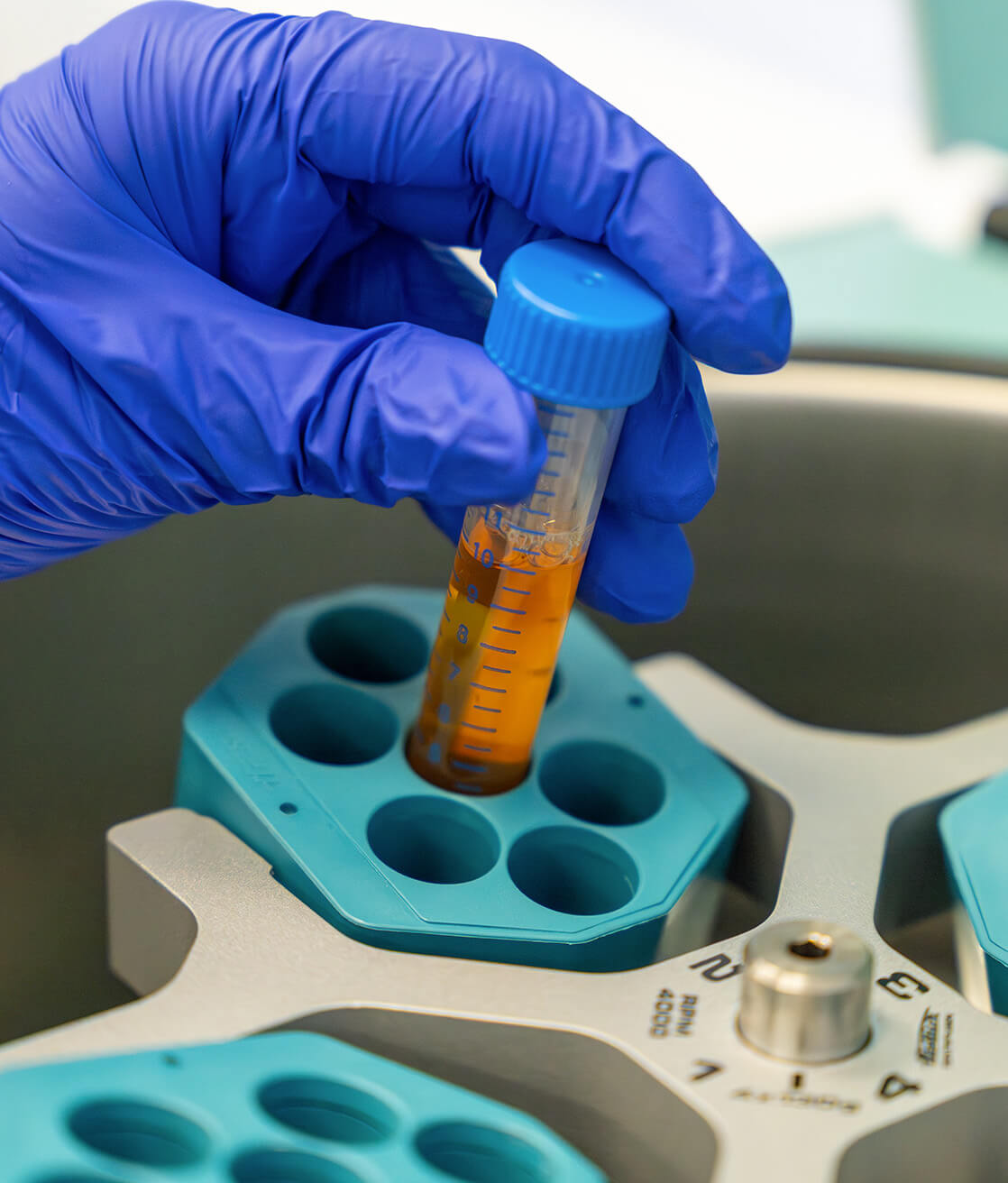
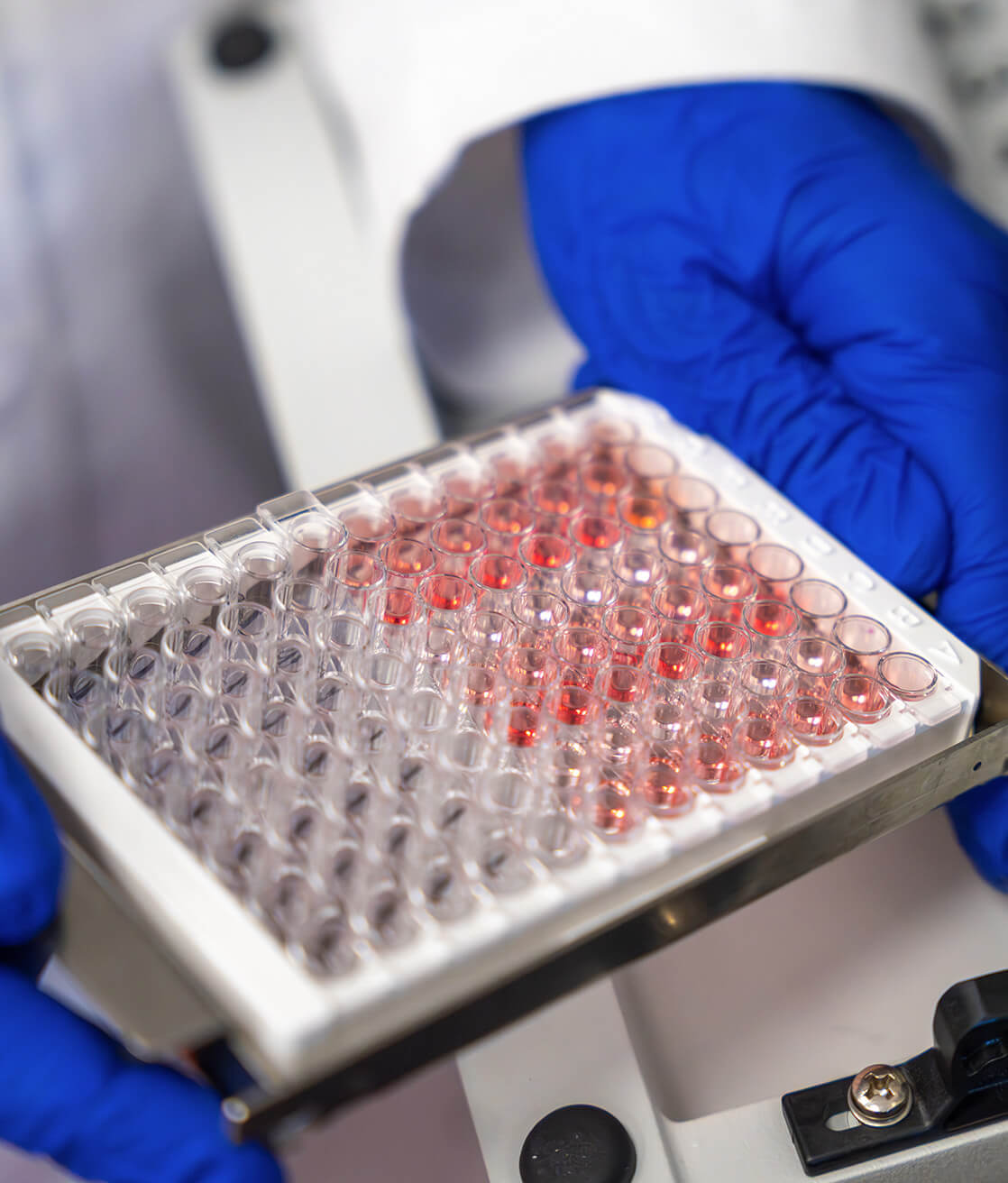
laboratory analysis
Find other tests
Total tau
This test provides the quantitative determination of total tau protein to support the diagnosis of Alzheimer’s disease.
Phosphorylated Tau (pTau181)
This test provides the quantitative determination of tau protein phosphorylated at threonine 181 (pTau181), to support the diagnosis of Alzheimer’s disease.
Anti–NMDAR Antibodies
Test for the determination of human autoantibodies against NMDAR to support the diagnosis of paraneoplastic neurological syndromes with an intermediate-risk phenotype.
Discover what’s new
Subscribe to the newsletter
Subscribe to our newsletter to be always updated.